Biblioshelf Musings – Six Crimson Cranes by Elizabeth Lim

Hello Bibliofriends!

This week’s Biblioshelf Musings is Six Crimson Cranes by Elizabeth Lim. Sometimes you start a novel and know immediately that you are going to absolutely love and devour it – Six Crimson Cranes was one of those books! It completely transported me into a world of utter magic and fairytale.

Thank you to the publishers Hodder and Stoughton and the author Elizabeth Lim for providing me with a complimentary e-ARC of this book through NetGalley in exchange for an honest review. I didn’t manage to finish reading the whole e-ARC before it was archived but I was so thrilled when an exclusive edition of Six Crimson Cranes arrived in my July Fairyloot box – it has the most beautifully detailed cover and the sprayed edges feature the six cranes and Kiki the origami crane! It’s a work of art and I love it so much!


Book: Six Crimson Cranes by Elizabeth Lim
Genre: Fantasy / YA
Publication Date: 8th July 2021
Publisher: Hodder and Stoughton
Pages: 454
Rating: 📚📚📚📚

Synopsis (from Goodreads)

Shiori, the only princess of Kiata, has a secret. Forbidden magic runs through her veins. Normally she conceals it well, but on the morning of her betrothal ceremony, Shiori loses control. At first, her mistake seems like a stroke of luck, forestalling the wedding she never wanted, but it also catches the attention of Raikama, her stepmother.

Raikama has dark magic of her own, and she banishes the young princess, turning her brothers into cranes, and warning Shiori that she must speak of it to no one: for with every word that escapes her lips, one of her brothers will die.

Peniless, voiceless, and alone, Shiori searches for her brothers, and, on her journey, uncovers a conspiracy to overtake the throne—a conspiracy more twisted and deceitful, more cunning and complex, than even Raikama’s betrayal. Only Shiori can set the kingdom to rights, but to do so she must place her trust in the very boy she fought so hard not to marry. And she must embrace the magic she’s been taught all her life to contain—no matter what it costs her.

My Musings

Elizabeth Lim’s voice and storytelling style conjured up a whole world in my head which I found fascinating. From the mountains, forests, rivers and seas, from Iro to Gindara and the dragon realms and islands in between there was always a new landscape to get completely immersed and lost in. It’s definitely one I’m adding to my bucket list of fictional worlds that I need to travel to.

I enjoyed that this was more than just your average retelling of The Wild Swans. I’m more familiar with the Grimm version (The Twelve Brothers) but I enjoyed the way that the author stayed true to the Anderson fairytale by weaving it into a stunning narrative then filling it up with extra characters and additional plot points. There was plenty of action, drama and complicated obstacles for the characters to overcome. The whole narrative exuded a magical quality, almost like lots of little moments from my favourite Disney movies all weaved together like golden threads intermittently throughout.

Shiori’s character initially came across to me as quite childish and naïve, everything she was supposed to be as a Princess living a fairly sheltered life – but then following the curse and the hardships she faced, her character was given the space to grow and mature. By the end of the novel I was championing her due to how much she had evolved through all of her trials and tribulations. Kiki, the sentient origami crane was so adorable that I had to have a go at creating some of my own!

Seryu the dragon shapeshifter was so fascinating and I’m excited to hopefully explore a bit more of the Ai’Long Realm in the next book. Takkan’s role in the story brought a little bit of romance which I was completely here for, but I’m being a little sceptical of a potential love triangle appearing in the sequel… I could be barking up the complete wrong tree though so I guess I’ll have to wait for book 2 to find out!

Several years ago, I remember reading a Chinese proverb about how an invisible thread connects those who are destined to meet regardless of time, place or circumstance. As a big believer of fate and divine intervention etc. I was so taken by this idea and here, in Six Crimson Cranes, Elizabeth Lim incorporated it so beautifully into her storyline that it made me love this book even more. All of the magical elements and events relating to the threads of fate and Shiori’s weaving of the starstroke were so vivid that it definitely appealed to all of my reading tastebuds!

Just on a personal note, I found the ending to be slightly drawn with regards to one particular character. I appreciate that it was setting up for a sequel but I was way more interested in the outcome of the narrative between Raikama’s and Zairena’s characters because I found them so intriguing and hope we get to see them later in the series.

Overall, Six Crimson Cranes is one of my new favourite fairytale retellings. Elizabeth Lim’s story manages to exude mysticism, drama and folklore from every page. Stunning!


Find out more about this book here:

NetGalley | Publisher Website | Amazon | Waterstones | Bookshop.org | Goodreads | Author’s Twitter: @LizLim | Author’s Website

Connect with me here:

Twitter | Goodreads | Book Sloth: @thebiblioshelf | Email: thebiblioshelf@gmail.com
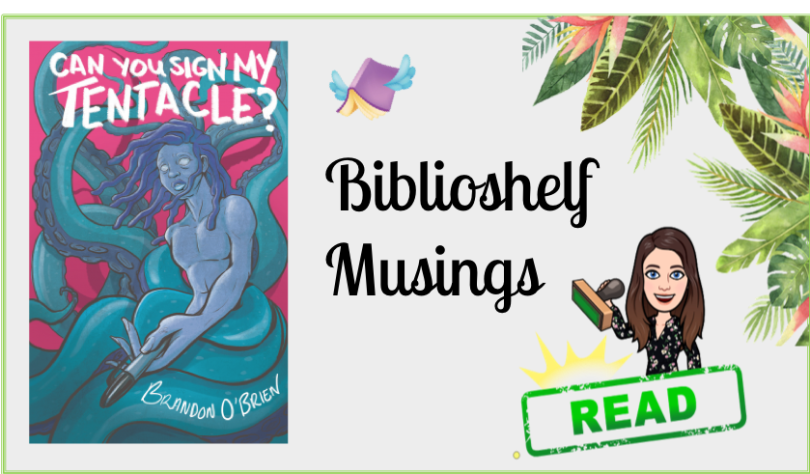
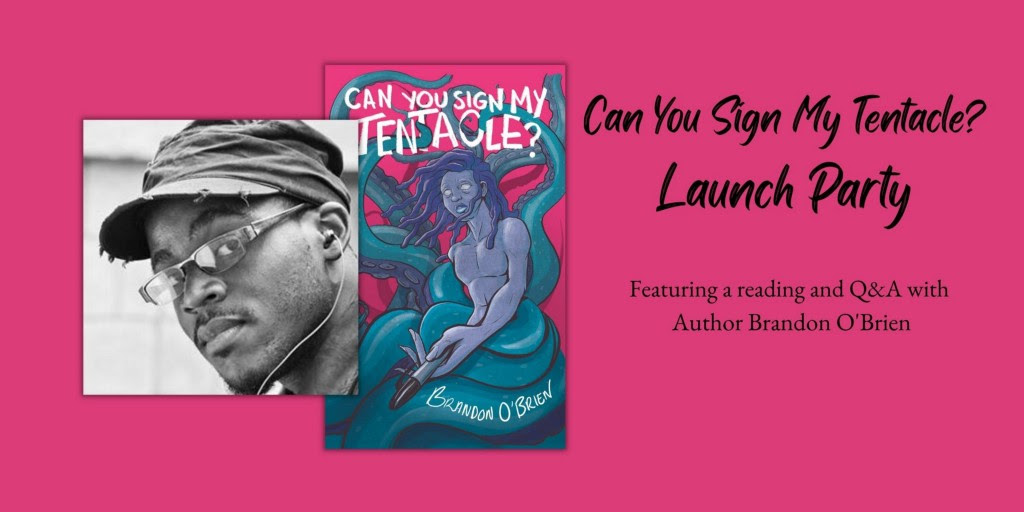
Biblioshelf Musings – Can You Sign My Tentacle? by Brandon O’Brien

Hello Bibliofriends!

This week’s Biblioshelf Musings is Can You Sign My Tentacle? by Brandon O’Brien – a beguiling, unique collection of poetry which merges together a hybrid mix of contemporary hip-hop and folklorian Lovecraft monsters in a fun fusion of science-fiction and poetry. On the surface, it offers an entertaining, comedic chronicle; however, between the lines it offers something much more meaningful and profound.

Thank you to the publishers Interstellar Flight Press and the author Brandon O’Brien for providing me with a complimentary e-ARC of this book through NetGalley in exchange for an honest review.


Book: Can You Sign My Tentacle? by Brandon O’Brien
Genre: Science Fiction / Horror / Poetry
Publication Date: 20th August 2021
Publisher: Interstellar Flight Press
Pages: 75
Rating: 📚📚📚📚

Synopsis (from Goodreads)

Cthulhu meets hip-hop in this book of horror poems that flips the eldritch genre upside down. Lovecraftian-inspired nightmares are reversed as O’Brien asks readers to see Blackness as radically significant. Can You Sign My Tentacle? explores the monsters we know and the ones that hide behind racism, sexism, and violence, resulting in poems that are both comic and cosmic.

My Musings

What initially drew me to read Can You Sign My Tentacle?
Well first off, the title alone piqued my curiosity; then to discover that this was the work of a Caribbean author who has composed a strange blend of SFF, horror and poetry, I just had to open that cover and dive straight in.

Despite being a self-proclaimed SFF fan, I’ve never read any Lovecraft so I had no idea of the meaning behind the Cthulhu references until much later on. That being said, I feel this enabled me to approach O’Brien’s collection with a wholly open-mind.

O’Brien does not shy away from tackling some of the big themes of racism, sexism and violence, but through this unusual mix of varying genres, his messages tend to pop out and command your attention in a way that may be much less fun or remarkable in traditional prose.

There are some wonderful phrases and language. As a bit of a logophile, I was struck by the beautiful and bizarre range of vocabulary that Brandon utilised across his writing.

Notably in The Metaphysics of a Wine, In Theory and Practice, the concoction of academia-style concepts mixed with the celestial, paranormal-esque commentary of being lost in the throes of dancing captivated me. Other poems such as The One, Lovecraft Thesis #3 and Time, and Time Again were particular favourites.

The Author’s Note at the end (along with a little help from Google) helped me to understand how O’Brien’s use of the eldritch genre brought Can You Sign My Tentacle? to life. It tied together some of the loose connections that I hadn’t grasped from my initial reading and clarified the Lovecraft references along with the author’s influences and inspiration for writing this collection of poems.

I really, really like this book. It’s different, it’s highly entertaining yet meaningful at the same time. The poems are curious and provocative. The whole theme of the collection and ideas behind the Cthulhu/Lovecraft mix are totally original and have taught me something new; not just about the medley of Science-Fiction and Poetry as genres, but about the over-inflated concept of self-importance and that nobody or nothing is infallible.

In a world where cancel culture seems to be increasingly (somewhat shockingly) normalised, O’Brien’s narrative seems to challenge this notion and turn it on its head. Just as Lovecraft was undoubtedly a talented writer who has done much to shape the SFF genre, O’Brien shows that rather than ‘cancelling’ or criticising his creative legacy, we can turn his prejudices into a weapon and opportunity for education and awareness. He shows that we can learn from past denigrations and champions how today’s society can shift away from the attitudes, mistakes and short-sightedness of those who came before us.

I went into Can You Sign My Tentacle? looking for something a bit on the offbeat, peculiar side – I came out of it with something undoubtedly more meaningful. O’Brien is truly a voice to be celebrated. He has written such a thought-provoking, original masterpiece with a trailblazing message which will stay in my mind for a long time to come.


About the Author

Brandon O’Brien is a writer, performance poet, teaching artist and game designer from Trinidad and Tobago. His work has been shortlisted for the 2014 Alice Yard Prize for Art Writing, the 2014 and 2015 Small Axe Literary Competitions, and the inaugural Ignyte Award for Best Speculative Poetry. His work is published in Uncanny Magazine, Strange Horizons, Reckoning, and New Worlds, Old Ways: Speculative Tales from the Caribbean, among others. He is the former Poetry editor of FIYAH: A Magazine of Black Speculative Fiction.

Virtual Book Launch

Interstellar Flight Press are holding their first ever Virtual Book Launch for Can You Sign My Tentacle? It’s a free event on Zoom so check out the details below if you’re interested!

Here’s the details! Sign up via Eventbrite to join us.

Date: August 20th at 6:00pm EST / 5:00 PM CDT

Online via Zoom/Eventbrite

You will receive info from Eventbrite on how to access the event after you register. This event is FREE to attend.

Find out more about this book here:

NetGalley | Publisher Website | Amazon | Waterstones | Goodreads | Author’s Twitter

Connect with me here:

Twitter | Goodreads | Book Sloth: @thebiblioshelf | Email: thebiblioshelf@gmail.com
Biblioshelf Musings – These Violent Nights by Rebecca Crunden

Hello Bibliofriends!

This week’s Biblioshelf Musings is These Violent Nights by Rebecca Crunden – a gritty, adult fantasy with a cast of characters that break apart but rejoin together in an epic, sweeping conclusion. I would really like to thank Rebecca for sending me a complimentary copy of her book in exchange for my honest review.


Book: These Violent Nights by Rebecca Crunden
Genre: Fantasy
Publication Date: 31st March 2021
Publisher: Independent
Pages: 484
Rating: 📚📚📚📚

Synopsis (from Goodreads)

Once upon a time, inhabitants of another world tore a hole through the universe and came to Earth. They called themselves Suriias, and rivalled humans in knowledge and skill with one great exception: they had magic.

War followed. Humanity lost. And three hundred years later, humans are on the brink of extinction.

Orphans Thorn and Thistle live in hiding. They are the last of their families, the last of their friends. They scrape by, stealing to survive and living on the streets or hiding in sheds. But even under the brutal regime of the Suriias, there are places where humans can mingle in secret with magical sympathisers, and one night Thistle gets an unexpected offer of marriage from a Suriia with high standing and friends in all the right places. For Thistle, it’s a chance at safety and comfort; for Thorn, it’s a chance to find the ones who killed her parents.

And so the pair move into the capital city of Courtenz. An urban monstrosity of magic and might, false friends and flying cars, drones and death tolls, the new city promises a fresh start – and new love – for both.

But if there’s one thing Thorn knows for certain, it’s that dreams can swiftly turn into nightmares.

My Musings

I sometimes find that I read so many Fantasy novels that fit into the YA age bracket that I can often end up putting myself into a bit of a rut and end up crying out for something just a little more on the dark side…
Well readers, These Violent Nights was it.

Earth has been torn apart by a War involving humans and supernatural beings who came to Earth from Salfar via a Tear in the dimensions of the universe. At the start of the novel, we are introduced to the fascinating, magically-built world of Courtenz with its metropolitan vibes, modern skyscrapers and technologically advanced Coach travel. In this world there is no place for humans; they are outcasts, kept as slaves or treated as the dregs of society. We really begin to feel the segregation of humans through the eyes of Thorn and Thistle who struggle to keep themselves alive and hidden.

As Thorn and Thistle’s world collides with their Suriia enemies, the first part of the novel showcases Thorn’s animosity towards Kol and Nithin and her mistrust of their true intentions. It drives the plot forward as she sets out to try and track down those responsible for her parents’ death whilst also attempting to find a new group of humans to band together with and escape the magical hell she has found herself caught up in.

From the diverse range of Suriia backgrounds and abilities, to the harrowing levels of violence and segregation between the humans and magic-bearers, there was plenty of complex world-building and plot politics to get stuck into. I enjoyed that the differences of the Frai, Vrykos, Ghuls (amongst others) was explained alongside the backdrop of information about how the world came to be as it is now. There was lots to take in, but not too much that it overwhelmed the action within the story.

The structuring of the novel is quite different to other stories I’ve read before. At times, the narrative felt like it was three linked novellas forming as one complete story arc. As the end of Part One rolls into Part Two we get left on a cliffhanger then introduced to an entirely new cast of characters as the story veers away from Thorn’s viewpoint. The reader gets to experience a new group of Suriia and human characters who live in a different part of this strange, dystopian Earth Crunden has created. In Lucien’s part of the world, humans pose more of a resistance and threat to the magic-bearers and this new story dynamic keeps the whole novel fresh and action-packed – all the while wondering what and where we are going to be taken next.

By the time Part Three begins, characters from both preceding parts collide. We get to see the aftermath of that cliffhanger at the end of Part One whilst also benefitting from a greater understanding of the world and circumstances of the groups of characters that dwell within it from explanations within Part Two. The final part of the novel brings the world of Salfar to the fore and provides a more traditional fantasy element than the previous parts of the story. It seeks to tie up the loose ends which came before it and supplies a neatly wrapped up conclusion (with some pretty, sneaky twists along the way)!

This three part plot was a bold way to structure the novel and even though it initially felt a little strange to leave one set of characters behind completely, it really paid off in the final climax of the novel as plots and conspiracies merge back together with both Suriia and humans now fighting for a common cause.

Overall, These Violent Nights is a dark, gritty and edgy adult fantasy novel which, as its title suggests, is packed with a ferocious wildness and complex, multi-layered plot. It’s most compelling element for me is how poignant the divide between Suriias and humans could so very easily be transposed into today’s real world issues: race, gender, vaxxed and unvaxxed… As my mind probably read way too deeply into that element of the story (too much Twitter doomscrolling!), the unsettling feeling which the novel invoked in me was exactly the type of vibe I was looking for after reading many fluffily-wrapped up happy endings.

Ultimately, underlying all of that segregation, revolution and warfare, These Violent Nights brings about an immensely memorable and strong group of characters to champion. Characters who overcome their personal issues and fight to craft out a world they truly believe in. A cast who sacrifice and compromise, who break down their barriers, who overcome their differences, all with the aim of trying to bring about a more understanding, hopeful and harmonious future for all… and that’s got to be something worth fighting for, isn’t it?


Why Should I Read This?

For a dystopian future Earth which could easily be reminiscent of today’s segregated societies.
For the intriguing design structure of the three-part narrative.
For an originally crafted fantasy world and magical beings.

Find out more about this book here:

Amazon | Waterstones | Goodreads | Author’s Website |

Connect with me here:

Twitter | Goodreads | Book Sloth: @thebiblioshelf | Email: thebiblioshelf@gmail.com

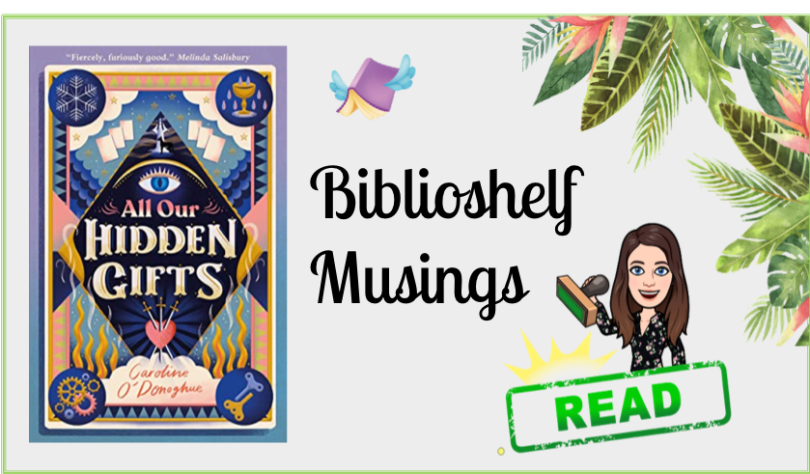
Biblioshelf Musings – All Our Hidden Gifts by Caroline O’Donoghue

Hello Bibliofriends!

This week’s Biblioshelf Musings is All Our Hidden Gifts by Caroline O’Donoghue. I would like to thank NetGalley and the publishers, Walker Books, for providing me with an e-ARC in exchange for my honest review.

This book completely had me at the word ‘tarot’. I’ve always been intrigued by the art and origins of tarot reading so having a spooky deck of cards as the centrepiece for a novel really hooked me into the story and seemed quite different to other tropes/plot drivers that I’ve read about recently. Combined with a diverse band of main characters and set against a backdrop of Irish politics, this YA novel gave me plenty to enjoy.


Book: All Our Hidden Gifts by Caroline O’Donoghue
Genre: Teens / YA
Publication Date: 27th May 2021
Publisher: Walker Books
Pages: 304
Rating: 📚📚📚📖

Synopsis (from Goodreads)

Maeve Chambers doesn’t have much going for her. Not only does she feel like the sole idiot in a family of geniuses, she managed to drive away her best friend Lily a year ago. But when she finds a pack of dusty old tarot cards at school, and begins to give scarily accurate readings to the girls in her class, she realizes she’s found her gift at last. Things are looking up – until she discovers a strange card in the deck that definitely shouldn’t be there. And two days after she convinces her ex-best friend to have a reading, Lily disappears.

Can Maeve, her new friend Fiona and Lily’s brother Roe find her? And will their special talents be enough to bring Lily back, before she’s gone for good?

My Musings

All Our Hidden Gifts centres around our main character Maeve who finds a mysterious deck of tarot cards (along with a working cassette walkman) whilst she’s on detention at her all-girls Catholic school St. Bernadettes. For someone who isn’t that academic, Maeve finds it surprising easily to grasp the rules of tarot reading and begins hosting sessions for the girls at her school. Upon the strange appearance of an eerie ‘Housekeeper’ card and the mysterious vanishing of her former best friend Lily, Maeve embarks on a journey with sidekicks Roe and Fiona to try and solve the mystery of Lily’s disappearance. On their way, they uncover peculiar happenings in their small Irish town and get drawn into the conflicting politics of religion, pride and magic.

I loved the presence of the tarot cards as a key driver in this novel – I’ve always had some kind of magical fascination with them and the way the peculiar Housekeeper card has such an impact on Maeve’s life was gripping, I’m just so pleased that I haven’t found a Housekeeper card in my own tarot deck because that would definitely freak me out!

Maeve is such a young and honest lead. Whilst some of her choices are a little naive or questionable, particularly friendship-wise, I like the honesty in which she confronts her actions. Caroline’s portrayal of Maeve seems so authentic to that young, teenage girl going-through-the-motions-of-high-school that I really bought into her as a character and as someone who also went to an all-girls school.

The supporting characters complement Maeve really well. Roe’s exploration of his sexuality and expression of identity was refreshing and poignant in the way it related to some of the more political conflicts going on around the main storyline. Fiona’s Asian influences also drew a unique parallel with both Maeve’s and Roe’s experiences. Their diversity added a great deal of depth to the storyline whilst also helping Maeve to see the true values and meanings of friendship.

The magical element of the plot goes beyond just the tarot deck. Amongst the talk of otherworldly dimensions and summonings of spirits, Maeve’s experiences with homemade spells and witchcraft keep this element of the story quite realistic and believable without straying too far into the realms of complete fantasy. As Maeve discovers why she has such an affinity with the tarot deck, we start to understand a little more about her powers and tie up some of the looser ends within the story.

What I really enjoyed about this story was the way the author addresses some of the more political and controversial attitudes of Irish society. In our modern world of freedom, self-expression and pride, we can sometimes forget the ongoing struggles people face while trying to be their authentic selves in communities which are still devoutly conservative or religious. Whilst this forms a central part of the narrative for Roe’s character, O’Donoghue communicates this sensitively – raising awareness without giving too much of a historical/political narrative. Her tone is in-keeping with the rest of the novel and subtly gives the reader something to think about without going beyond the Teens/YA audience barrier. The Irish representation is something I haven’t experienced before in stories within this genre so it added to my enjoyment of the novel.

I have a special mention of adoration for the part of the narrative centring around Sister Assumpta and her decrepit VW Beetle. I hate spoilers so I won’t really mention it here but the presence of this in the story and the discoveries Maeve makes in that little car kept me flipping page after page to get to the bottom of those curiosities!

Overall, All Our Hidden Gifts is ultimately the book which broke me out of my reading slump. I loved the tarot element and the friendship between Maeve, Roe and Fiona. It was magical without being overly fantastical and is fitting of its ‘Teen/YA’ age bracket, although I personally feel this fits into the younger side of the YA genre. Roe’s character gave me food-for-thought and the backdrop of Irish sensitivities brought a new representation to my reading diet. News has it that there’s a follow-up novel planned. Whilst I’m left feeling contented about the ending of All Our Hidden Gifts, it will be really fascinating to see where O’Donoghue takes this story next.


Why Should I Read This?

For the tarot element and the creepy Housekeeper card (think the creature from The Grudge with the Grim from Harry Potter).
For an original fantasy set in the backdrop of Irish politics and conservatism.
For a band of diverse characters who help each other to bring out the best in themselves.

Find out more about this book here:

Amazon | Waterstones | Bookshop.org | Goodreads | Author’s Website | Publisher Website

Connect with me here:

Twitter | Goodreads | Book Sloth: @thebiblioshelf | Email: thebiblioshelf@gmail.com
Biblioshelf Musings – The Absolute Book by Elizabeth Knox

Hello Bibliofriends!

This week’s Biblioshelf Musings is for The Absolute Book by Elizabeth Knox. I would like to thank NetGalley and the publishers, Penguin Michael Joseph UK, for providing me with an e-ARC in exchange for my honest review.

After reading The Absolute Book, I found myself struggling to verbalise my reflections of reading it. Sometimes my head was brimming with thoughts, other times there was a void as if I had forgotten the last 600 pages of story which had just unfolded in front of me. This is more an indication of my headspace at the time I was reading the book as opposed to a true representation of the kind of novel The Absolute Book is. I’ve tried to work around this and make this apparent through my following review so apologies if what comes after this is a little stilted!


Book: The Absolute Book by Elizabeth Knox
Genre: General Fiction / Fantasy / Mystery
Publication Date: 18th March 2021
Publisher: Penguin Michael Joseph
Pages: 628
Rating: 📚📚📚📖

Synopsis (from Goodreads)

Taryn Cornick barely remembers the family library. Since her sister was murdered, she’s forgotten so much.

Now it’s all coming back. The fire. The thief. The scroll box. People are asking questions about the library. Questions that might relate to her sister’s murder.

And something called The Absolute Book.

A book in which secrets are written – and which everyone believes only she can find. They insist Taryn be the hunter. But she knows the truth.

She is the hunted . . .

The Absolute Book is a tale of sisters, ancient blood, a forgotten library, murder, revenge and a book that might just have the answer to everything.

My Musings

I found The Absolute Book to be a pleasantly challenging read. The blend of magical realism mingling with portals to fantastical worlds, hitchhiking demons and a dazzlingly curious box named ‘The Firestarter’ gave me a lot to get my head around.

The main characters had enigmatic secrets leading my brain to try and stretch to reach for what was actually unfolding between the lines. Each part of the story was full of gradual reveals; things happened which I only fully understood afterwards when other characters discussed and explained the events to each other.

Taryn’s ongoing suffering surrounding the death of her sister and the repercussions which follow, prove to be a key driving force behind the actions and events within the novel. This provided a mysterious whodunnit feel adding suspense and intrigue to the plot. 

The shiftiness of Shift (puns aplenty!) created a conundrum of unreliability which was brilliantly perplexing for the characters as well as the readers who were trying to keep up with them.

An interweaving of fairytale and folklore from different mythologies generates a multidimensional world complementing the complexities of the storyline incredibly well. From the Celtic Sidhe faerieland, the presence of shapeshifters and Norse talking birds, to the alluded references to Merlin, portal gates on ley lines and influences from the most notable of the ‘stories-about-stories’ genre, this book is jampacked with an epic range of fantasy motifs and themes to command your attention.

Tolkein-esque expositions pepper the narrative appealing to those of us who enjoy our world-building on the lavishly rich side. The homage to libraries and guardianship of books and memories speaks out to our bookish afflictions.


From Heaven to Hell and all of the human or faerie purgatories in-between, The Absolute Book is entirely deserving of its high acclaim from professional reviewers and critics. 

When I read this book at the end of March, I was trying to fit to a NetGalley deadline. Global pandemic aside, there was a lot of background noise which stymied me from giving it the attention it deserved. It also made this review quite difficult to write. In that respect, I feel like I let The Absolute Book down.

Netting in at over 600 pages, this is not your light-hearted beach read or just something to provide a meaningless distraction amidst everyday life. The Absolute Book is a tale which deserves an almost essay-like dissection to reveal its multitude of wonders and the exquisite depth and breadth of its writing. It’s exactly the type of book that warrants a reread – it’s earned that. I feel I need to give this novel another chance to discover all of the hidden gems and fantasy Easter eggs which have been lovingly crafted into its pages.

I found Nina Hall’s review from The Guardian a wonderfully fitting analysis of just how much The Absolute Book has to offer readers. Her piece is the main incentive for me adding this book to my reread list. You can check out her review here.

Why Should I Read This?

For the loving ode to stories and libraries which forms a central part of the storyline.
For the amazing mix of fairytale, folklore and mythology all merged and mingled together.
For the challenge – it’s an adult fantasy offering a thrilling complexity unlike anything else I’ve ever read.

Further Reading:

Elizabeth Knox: Why I Wrote The Absolute Book – This post, by the author herself, reveals some helpful insights as to the motivations behind different plot elements, as well as a beneficial hint at some of the influences she used to craft her world and characters.

About the Author:

Elizabeth Knox is an award-winning New Zealand author who has published over a dozen books. Her novel The Vintner’s Luck won the Deutz Medal for fiction in the 1999 Montana New Zealand Book Awards and the 2001 Tasmania Pacific Region Prize, while Daylight was shortlisted for Best Book in the South Pacific & South East Asian Region of the 2004 Commonwealth Writers Prize. Elizabeth has an ONZM, is an Arts Foundation of New Zealand Laureate and won the Prime Minister’s Award of Fiction in 2019. She teaches World Building at Victoria University and lives in Wellington, New Zealand, with her husband and her son.
(Taken from Penguin Michael Joseph January – June 2021 Publishing Catalogue)

Find out more about this book here:

Amazon | Waterstones | Bookshop.org | Goodreads | Author’s Website | Publisher Website

Connect with me here:

Twitter | Goodreads | Book Sloth: @thebiblioshelf | Email: thebiblioshelf@gmail.com
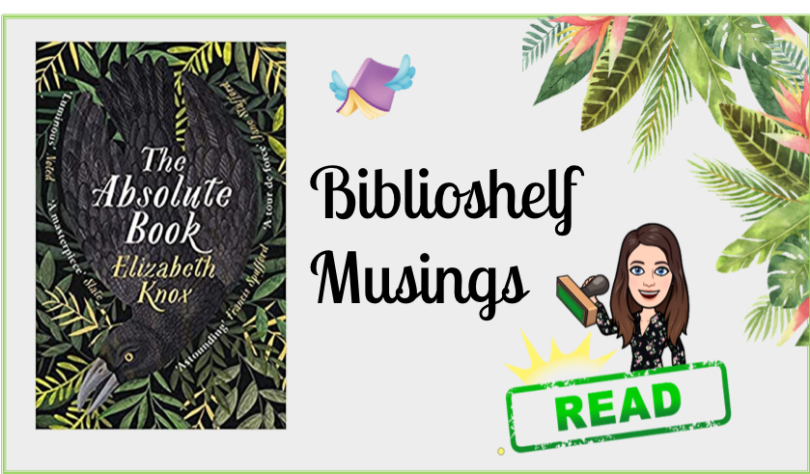
Biblioshelf Musings – The Bone Shard Daughter by Andrea Stewart

Hello Bibliofriends!

This week’s Biblioshelf Musings is for The Bone Shard Daughter by Andrea Stewart. There was such a buzz about this book across the blogosphere on it’s initial release in Hardback format, that I was so excited to get my hands on an e-arc of it from NetGalley in preparation for the paperback release date on 8th April 2021. Huge thanks to Little, Brown Book Group / Orbit, Andrea Stewart and NetGalley for my complimentary copy in exchange for this honest review.


Book: The Bone Shard Daughter by Andrea Stewart
Genre: Fantasy / Science-Fiction
Publication Date: 8th April 2021 (Paperback version)
Publisher: Orbit / Little, Brown Book Group
Pages: 496
Rating: 📚📚📚📚

Synopsis (from Goodreads)

The emperor’s reign has lasted for decades, his mastery of bone shard magic powering the animal-like constructs that maintain law and order. But now his rule is failing, and revolution is sweeping across the Empire’s many islands.

Lin is the emperor’s daughter and spends her days trapped in a palace of locked doors and dark secrets. When her father refuses to recognise her as heir to the throne, she vows to prove her worth by mastering the forbidden art of bone shard magic.

Yet such power carries a great cost, and when the revolution reaches the gates of the palace, Lin must decide how far she is willing to go to claim her birthright – and save her people.

My Musings

Shifting islands, an empire on the brink of revolution and a sinister magic involving shards of human bone… It’s no surprise that this was right up my bookish street!

Told through the perspectives of five different characters, the main story follows Lin, the Emperor’s Daughter as she tries to regain her lost memories and learn the complexities of bone shard magic in order for her father to declare her as his heir. Elsewhere around the empire, we follow Jorvis, a smuggler, as he attempts to escape both the Ioph Carn and the Empire whilst smuggling children away from trepanning ceremonies and trying to track down a mysterious boat which kidnapped his wife several years previously.

With the addition of sapphic couple Phalue and Ramani (a Governor’s Daughter and her partner) who are trying to put their different upbringings aside to compromise on their ambitions to create a better world, and a mysterious island-dweller Sand who can’t remember anything about her past, there is plenty of character development to keep your mind buzzing as their storylines gradually become intertwined in the course of the novel.

For me, Stewart hit the right balance between the length of each character’s perspective and the pacing of them throughout the story. Each character break left me on a cliffhanger, just wanting to find out more. Lin’s determination and braveness made her likeable and Jovis’ vulnerabilities and honesty made me champion him as his storyline took various twists and turns. I also admired the way that Stewart was not afraid to be bold and daring when it came to the fates of her characters. My heart was in my mouth at more than one point whilst reading this book (with one particular moment involving a family of side-characters leaving me reeling)!

Mephi was by far my favourite character though – I’m such a sucker for animals and the mysterious nature of his origins and power is something I am hugely intrigued about. His relationship with Jovis was wonderfully written so I hope we get to see and learn more about them both in the sequel.

I need to say how much I loved the STEM representation within this book! For those who may not be aware, STEM is an acronym used in education to describe subjects relating to Science, Technology, Engineering and Maths. As a primary school teacher (and the Maths/Computing lead), there has been a big shift in the promotion of these subjects, particularly with providing opportunities for girls and young women to try and inspire them in pursuing these industries in their future careers and highlighting just how widespread and multi-faceted these subjects are.

It was so refreshing to see the main character, Lin representing this through her pursuit of learning bone shard magic. The idea that bone shard magic is some sort of magical computer programming for the strange, Frankenstien-esque, living constructs was a really intriguing and unique type of magic which is so different to the most common forms that you usually encounter in fantasy stories.

I loved the way Stewart mixed these ideas together and the way performing the magic was explained. It gave just enough detail so that I could fully understand what was happening, whilst at the same time being subtle enough to keep it mystical rather than overwhelmingly scientific.

The constructs themselves left me freakishly curious; part-human / part-animal, they brought a quirky element to whole narrative. At times, I struggled to visualise them in my head but I enjoyed how unique and strange they were. As the plot unravels, we get to understand a little more about how the constructs are made and it was interesting to see how they are integral to some of the bigger plot twists and developments within the story.

I loved the Asian-inspired world and the shifting islands that Stewart created. It was supernatural yet realistic. Through the descriptions of each place, I could clearly build a picture of the islands in my mind and I liked how they had their own stories and vibes, as well as the way they interacted with each other and provided a stage for the different characters and events. The incident with Deerhead Island towards the start of the novel put the scope and scale of what could happen in this world right at the forefront of my mind. I still feel like there is so much more to explore of this empire and I’m hoping we get to see that in The Bone Shard Emperor.

Overall, this fantasy with a STEM-based twist did a superb job at setting the scene and whetting my appetite for the rest of the series. We are now familiar with the world, the magic and the characters. Breadcrumb trails have been left for even more secrets to be uncovered about Lin and Jovis, the constructs, the mysterious Alanga artefacts and the future of the empire. The chess pieces are on the board and I can’t wait to see how they move in the second instalment of this Drowning Empire series! 

Why Should I Read This?

For the quirky, computer-science element to the bone shard magic.
For an intertwining cast of characters all converging on an Empire on the brink of political revolution.
For a unique, Asian-inspired fantasy which seeks to redefine the parameters of blending science with magic.

About the Author:

Andrea Stewart is the Chinese American daughter of immigrants, and was raised in a number of places across the United States. Her parents always emphasized science and education, so she spent her childhood immersed in Star Trek and odd-smelling library books. When her (admittedly ambitious) dreams of becoming a dragon slayer didn’t pan out, she instead turned to writing books. She now lives in sunny California, and in addition to writing, can be found herding cats, looking at birds, and falling down research rabbit holes.

Find out more about this book here:

Amazon | Waterstones | Bookshop.org | Goodreads | Author’s Website | Publisher Website

Connect with me here:

Twitter | Goodreads | Book Sloth: @thebiblioshelf | Email: thebiblioshelf@gmail.com

Biblioshelf Musings – The Princess Diarist by Carrie Fisher

Hello Bibliofriends!

A long time ago in a galaxy not so far away, there lived a girl called Carrie Fisher who turned up at an interview for a small-budget space movie and ended up being one of the most iconic Science-Fiction Princesses of our time.

This week’s Biblioshelf Musings is all about The Princess Diarist by Carrie Fisher. It should be no surprise that as a massive SFF fan, Star Wars is pretty high up on my personal ‘best-film-franchises’ list, even if I was somewhat later to the party than most of my friends. I was so excited when Carrie first announced this book and then after the unfortunate tragedy of her passing not long after the book’s release, it became something surreal which felt a little too personal to be reading at that point in time. Anyhow, since the conclusion of Episode IX and TV shows such as The Mandalorian reigniting my passion for Star Wars again – now seemed like a brilliant time to read Carrie’s final book.


Book: The Princess Diarist by Carrie Fisher
Genre: Memoir
Publication Date: 24th November 2016 (Paperback version)
Publisher: Black Swan
Pages: 272
Rating: 📚📚📚.5

Synopsis (from Goodreads)

When Carrie Fisher discovered the journals she kept during the filming of the first Star Wars movie, she was astonished to see what they had preserved – plaintive love poems, unbridled musings with youthful naiveté, and a vulnerability that she barely recognized. Now her fame as an author, actress, and pop-culture icon is indisputable, but in 1977, Carrie Fisher was just a teenager with an all-consuming crush on her co-star, Harrison Ford. 
With these excerpts from her handwritten notebooks, The Princess Diarist is Fisher’s intimate and revealing recollection of what happened on one of the most famous film sets of all time – and what developed behind the scenes. Fisher also ponders the joys and insanity of celebrity, and the absurdity of a life spawned by Hollywood royalty, only to be surpassed by her own outer-space royalty. Laugh-out-loud hilarious and endlessly quotable, The Princess Diarist brims with the candour and introspection of a diary while offering shrewd insight into the type of stardom that few will ever experience.

My Musings

The Princess Diarist is such a powerful insight into Carrie Fisher’s mind and life. I can’t quite put all of my truest feelings about this book into words, but what I can say is that I am so pleased that we got to see this book in its fully published form before Carrie’s tragic death in 2016.

Carrie starts off brilliantly by practically listing all of the events that happened in 1976. This was great for me – as someone who wasn’t alive at that time, it provided a useful insight into the context of the mid 1970s and got my mindset into all that was going on in the world prior to the phenomenon that Star Wars was going to be. After giving a few insights into her life and her first acting role in the film Shampoo, Carrie quickly moves onto the interview process for A New Hope before launching into a chronological account of her memories during filming.

It’s so hard to read this book and not hear Carrie’s voice in your head. Her entire narration just exudes her personality and character – almost like and I hate using these words a word-vomit just filling the pages throughout the entirety of her commentary during that time. The stream of consciousness just pours out of her – there really is no other way I can describe it. At times, she even repeats some of the same iterations and phrases, then gives colloquial asides almost as if you’re just one of her friends and she’s talking to you from across the coffee table or down the phone. It’s that kind of narration-style which was a little like a double-edged sword for me: on the one-hand, I loved it because it felt so authentically like Carrie Fisher… on the other, there were a few times where I felt that line of narration became slightly too repetitive and I lost the momentum and pace of the memoir.

There are always two sides to every story which Carrie makes sure to mention when discussing her relationship with Harrison Ford. She gets quite deep and personal when reflecting upon her feelings towards her affair with him. Whilst she always maintains a respectful tone towards him and keeps some of the more intimate details of their relationship private, she definitely isn’t holding back on just how deeply she became emotionally and physically involved in their relationship during the time of filming.

That raw, vulnerable honesty is exuded even more so through Carrie’s personal diary extracts and poems. For me, this was the best part of the book by far. Spliced into the middle of her memoir, those extracts are so powerful at showing the reader exactly what her mind was going through during that time. You can feel the hurt, the abandonment, the despair, the desire, the devotion and that never-ending hope. The level of emotion is so undeniably real that I ended up feeling a little bereft at the end that section knowing that, whatever Carrison’s relationship was, it was always really doomed to fail.

What that diary part really does achieve, is to showcase Carrie’s talent for poetry. I’m aware that Carrie had previously published work as an author before this book, none of which I’ve read so ultimately cannot compare to anything, but her poetry really did make me consider her to be a talented writer.

In the latter parts of the book, Carrie considers the impact that the success of Star Wars had upon her life and just how intertwined her identity became caught up with Princess Leia, especially with that incredibly distinctive hairstyle and that bikini costume. Who would Carrie Fisher be without Princess Leia? She discusses the cost of fame on her normal life, the monetary issues which she faced, the objectification in a predominantly male environment then long afterwards by adoring fans begging for a piece; just how difficult it was dealing with the aftermath of appearing in a little space film which ultimately ended up being one of the most famous movie franchises in the entire world.

The final closing part of Carrie’s memoir, broke me. Again, I reiterate what I said at the beginning of my review – it is so difficult to communicate these thoughts in a way that anyone outside of my head can understand (unless, perhaps, you’ve read this book).
In a strange, morbid way, reading this book in 2021, knowing full well what happened not very long after this book’s publication – it’s almost like reading an epitaph that Carrie penned with her own hand – and Carrie’s words… they absolutely encapsulate her and her relationship with Star Wars and being Princess Leia.
I can’t write those ending lines down here and spoil it for anyone who does eventually read this book but… there’s just something about the finality of those last lines and her closing words that couldn’t have been anymore powerful or anymore perfect.

Carrie: you did it, you achieved exactly what you set out to do by publishing this memoir and these diary extracts – you proved that you’re more than just an intergalactic princess. Thank you for giving us this little insight into your world and may the Force always be with you.

Find out more about this book here:

Amazon | Waterstones | Bookshop.org | Goodreads |

Connect with me here:

Twitter | Goodreads | Book Sloth: @thebiblioshelf | Email: thebiblioshelf@gmail.com
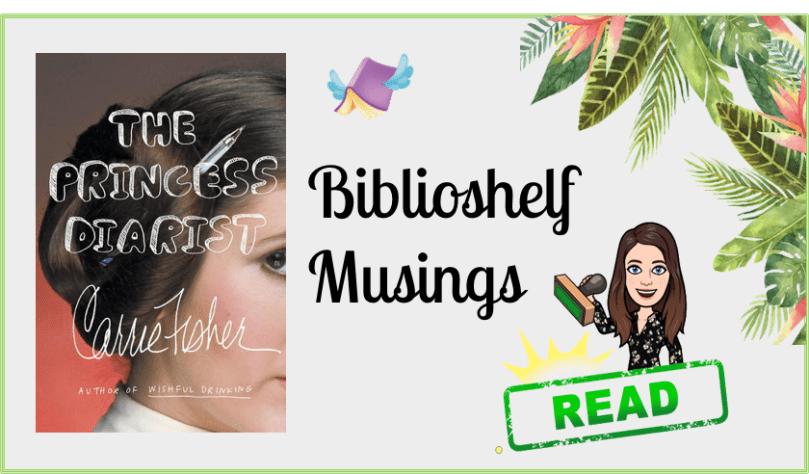
Biblioshelf Musings – The Authenticity Project by Clare Pooley

Hello Bibliofriends!

This week’s Biblioshelf Musings is a perfectly light-hearted audiobook called The Authenticity Project by Clare Pooley which I read as part of my ‘Tis the Damn Readathon TBR. I can’t really remember the reason why I initially downloaded this, but with the return to more hectic teaching life on the horizon – this seemed the exact type of easy-going fiction I needed to latch onto and ground myself in. The narrator, Anna Cordell, did a spectacular job of voicing the different personalities and characters – it added that extra entertainment value which I don’t think I would have received from reading a physical version of the book for myself. Funny, heartwarming and unassumingly addictive I loved everything this audiobook had to offer!


Book: The Authenticity Project by Clare Pooley (Audiobook narrated by: Anna Cordell)
Genre: Fiction (Contemporary)
Publication Date: 29th December 2020
Publisher: Penguin / Transworld
Pages: 384 (Audiobook: 10hr 25min)
Rating: 📚📚📚📚

Synopsis (from Goodreads)

The story of a solitary green notebook that brings together six strangers and leads to unexpected friendship, and even love

Julian Jessop, an eccentric, lonely artist and septuagenarian believes that most people aren’t really honest with each other. But what if they were? And so he writes–in a plain, green journal–the truth about his own life and leaves it in his local café. It’s run by the incredibly tidy and efficient Monica, who furtively adds her own entry and leaves the book in the wine bar across the street. Before long, the others who find the green notebook add the truths about their own deepest selves–and soon find each other in real life at Monica’s café.

The Authenticity Project‘s cast of characters–including Hazard, the charming addict who makes a vow to get sober; Alice, the fabulous mommy Instagrammer whose real life is a lot less perfect than it looks online; and their other new friends–is by turns quirky and funny, heartbreakingly sad and painfully true-to-life. It’s a story about being brave and putting your real self forward–and finding out that it’s not as scary as it seems. In fact, it looks a lot like happiness.

The Authenticity Project is just the tonic for our times that readers are clamoring for–and one they will take to their hearts and read with unabashed pleasure.

My Musings

The Authenticity Project was a delightful book centred around a group of people who are all brought together due to ‘The Authenticity Project’. Julian, being in his senior years and struggling to cope with loneliness and a nostalgia for lost youth, writes his ‘authentic story’ in a green exercise book and leaves it in a café for someone to find and add to.
How well do you really know the people that you think you know?
The idea of the project is to confess your true self amongst its pages, rather than the half-truths or airs and graces you may put on in front of friends, family and colleagues – even those Insta followers…!

As the book winds its way through life, more and more characters get added to the narrative. I have to say this is one of the things I loved about the multi-POV story. New characters were introduced exactly when they needed to be – at the point in the story where they started to contribute something to the plot. Pooley’s way of doing this builds up the reader’s familiarity with them gradually rather than just needlessly dumping all of the characters in head-first at the start. It gave me time to get that reader/character relationship embedded and feel like I understood them – or at least as much as I could in a novel about how well we think we truly know the people around us.

I also found it quite rare that there wasn’t a single character I didn’t like!

Julian was so witty and charming. Monica went through a transformative arc which resonated with some of my own circumstances. Hazard was the roguish gentleman on a quest to turn his life around for the better. Riley added the laid-back Australian vibes encouraging others to take life as they find it. Alice added a viewpoint which would initially be seen as harsh and shockingly preposterous however also brings a refreshing realism to anyone struggling with her issues. I have to make a bonus mention for Anna Cordell’s accent for Mrs Wu – absolutely delightful and never failed to make me chuckle! All-in-all, they were a bunch of characters who could have all been plucked straight from the real-world and I grew quite fond of them throughout the whole course of the book.

For the most part, The Authenticity Project was completely predictable, albeit in a heart-warming and sentimental kind of way. Don’t get me wrong – there were a few added plot twists which took me by surprise (and one which made me gasp out loud as I was readying my classroom for the return of the children!). By the time the end came, I could have happily spent a few more chapters and hours just absorbing the general day-to-day lives that surround Monica’s café. Nevertheless, the ending itself gives the reader (and the characters) that closure they need whilst at the same time emphasising that the world doesn’t really just stop; real-life doesn’t really have a definitive ending – life goes on living from one day to the next.

With themes of friendship, love and loneliness – this novel about finding and owning your own authenticity then sharing it with the world was delightfully enjoyable. For a while, it practically transported me to the corner of a little café on the Fulham Road, where I could be a fly-on-the-wall of other people’s fictional lives. An easy-going, uplifting read with a group of loveable characters and fun-filled anecdotes. It definitely reminds you to focus on what is important in life and in this world where we can become so stressed and preoccupied with our jobs and the online/social media world, The Authenticity Project felt like an important reminder to spend some time switched off from all of that and get back to living again.

Why Should I Read This?

For a charming bunch of characters who wear their vulnerabilities on their sleeves.
For a unique concept and story which could quite easily be non-fiction rather than fiction.
For an endearing and loveably heartwarming story to lift and inspire you.

Find out more about this book here:

Amazon | Waterstones | Bookshop.org | Goodreads | Author’s Website |

Connect with me here:

Twitter | Goodreads | Book Sloth: @thebiblioshelf | Email: thebiblioshelf@gmail.com

Biblioshelf Musings – The Favour by Laura Vaughan

Hello Bibliofriends!

This week’s Biblioshelf Musings took me a dark, deceptive trip down memory-lane to the fascinating art-world of Italy. The Favour by Laura Vaughan is a tricksy, mind-bending novel filled with a cunningly unreliable narrator, an insight into the lavish lifestyles of the social elite all framed with the overarching question, just how far would you go to fit in? Huge thanks to Readers First and the publishers Corvus for providing me a complimentary copy in exchange for an honest review.


Book: The Favour by Laura Vaughan
Genre: Fiction (Thriller / Mystery)
Publication Date: 4th March 2021
Publisher: Corvus
Pages: 325
Rating: 📚📚📚📚

Synopsis (from Goodreads)

When she was thirteen years old, Ada Howell lost not just her father, but the life she felt she was destined to lead. Now, at eighteen, Ada is given a second chance when her wealthy godmother gifts her with an extravagant art history trip to Italy.

In the palazzos of Venice, the cathedrals of Florence and the villas of Rome, she finally finds herself among the kind of people she aspires to be: sophisticated, cultured, privileged. Ada does everything in her power to prove she is one of them. And when a member of the group dies in suspicious circumstances, she seizes the opportunity to permanently bind herself to this gilded set.

But everything hidden must eventually surface, and when it does, Ada discovers she’s been keeping a far darker secret than she could ever have imagined…

My Musings

At the start of the story we are immediately thrown into Ada’s world of grief and upheaval as she faces leaving behind her lifestyle and ancestral home upon the death of her father. After a move to London and a generous offer from a wealthy relative, Ada embarks upon an art history adventure travelling through Italy as a Dilletante. For Ada, this is the break she has always desired, to discover her true purpose and destiny within a world of like-minded people. The trouble is, fitting in with the social elite isn’t always as easy as it seems (not when you have secrets to hide) – and after a tragic accident at a party, the relationships between the travel buddies is severely tested as they return home and try to go on living their usual lives amidst its aftermath. 

Ada was a thrillingly complicated and unreliable narrator. Her character arc was spectacularly crafted and took me on an incredible journey of shifting emotions. My empathy towards her varied greatly at different episodes in the story. Her feelings of mis-identity and that strong yearning to fit in with her fellow Dilletantes showed you this sense of loneliness and vulnerability which she must have been feeling – but then in the next breath, her fabrication of particular gestures or her backstory and her yearning to fit in has you wondering just what type of person she truly is. Her voice gave off a sense of dissociation which was intriguing; was she actually witnessing her life from outside of her body or was she truly experiencing all of those emotions and events from within her own head? In part, it reminded me of Eleanor’s narrative voice in Eleanor Oliphant is Completely Fine.

“Attempting to make myself indispensable had hollowed me out.”

As we got deeper into the plot and some of the Dilletantes started to reveal their true motives, it really made me wonder what kind of reality Ada was missing out on due to her tunnel-visioned focus into this lifestyle that she’d only ever been on the periphery of? The way the ‘favour’ masked Ada’s guilt at being an accomplice and her vehement self-denial was the flipside of a split-personality which just craved friendship and belonging. The multi-facetedness of her character and the tantalisingly dark plot twists gave this novel an unpredictability which I found fascinating to read.

Being set in Italy was such a draw for me. Travelling to Venice, Florence and Rome was one of my favourite and most memorable holidays so it was almost like journeying back to the past to see those places again through Ada’s eyes. I was immediately transported into those gloriously artisan surroundings with tavernas, canals and piazzas oozing with creativity and delicious food (and wine!). Vaughan’s lyrical writing helped to bring that Italian world to life in a way that made me want to keep on reading and exploring those galleries and museums with their beauty and Renaissance charm.

The technicalities of the artwork were expressed in a way which I found intriguing without being too overwhelming. I still couldn’t define for you what a pentimento is, but I enjoyed the way that some of those art techniques and famous paintings/sculptures tied in to the themes and plot of the novel.

I loved how sentient the ‘favour’ seemed to be and how it was used and moulded by several different characters all for their own motives. At first, the favour seemed to be created out necessity and tragedy, an act of quick-thinking combined with the desperation of trying to protect someone whilst at the same time cementing your place within their world. As the plot unravels, that same favour spiralled and shifted out of control leaving you to wonder who was the real puppet-master manipulating its strings. All of that drama made for such mind-bending reading and the plot twists came thick and fast right up until the very end.

“The Welsh have a word: hiraeth. It’s basically untranslatable, but it means the grief you feel for the lost places of your past. And something more: a longing for a home or time that may have never been.”

In a similar way, Ada’s ancestral home, Garreg Las, almost became one of the characters itself – always waiting there in the depths of Ada’s subconscious, an explicit reminder of how the house ties itself to Ada’s sense of identity and belonging. Sometimes it could be a status symbol to prove that Ada was a part of the Dilletante world, whereas at other times it was a refuge, a little corner of Wales that Ada felt she was truly home. I loved the way it would appear at different intervals within the narrative, like a guest star who makes special appearances and has to ensure they find their way into the encore before the final curtain fall.Overall, The Favour is a tremendously well-constructed story with Vaughan giving you teeny segments at a time whilst slowly building up to that spectacular final twist. Ada’s narration had me constantly second-guessing if I could trust her or whether in some ways she truly is a victim of her own making or sheer circumstance. Combining that dark and twisty narrative with the wondrously charming Italian surroundings made The Favour such a compelling read, and although at the start of the novel I was readily signing myself up a Dilletanti Discoveries style adventure… let’s just say I’d definitely be a little warier about trusting my fellow travel buddies after reading this!

Why Should I Read This?

For a superbly written unreliable narrator who has you questioning her motives right up to the end.
For the richly decadent Italian settings – the perfect wanderlust quencher in a lockdown world.
For the psychological questioning of friendship and what it truly means to belong and fit in.

Find out more about this book here:

Amazon | Waterstones | Bookshop.org | Goodreads | Author’s Website |

Connect with me here:

Twitter | Goodreads | Book Sloth: @thebiblioshelf | Email: thebiblioshelf@gmail.com

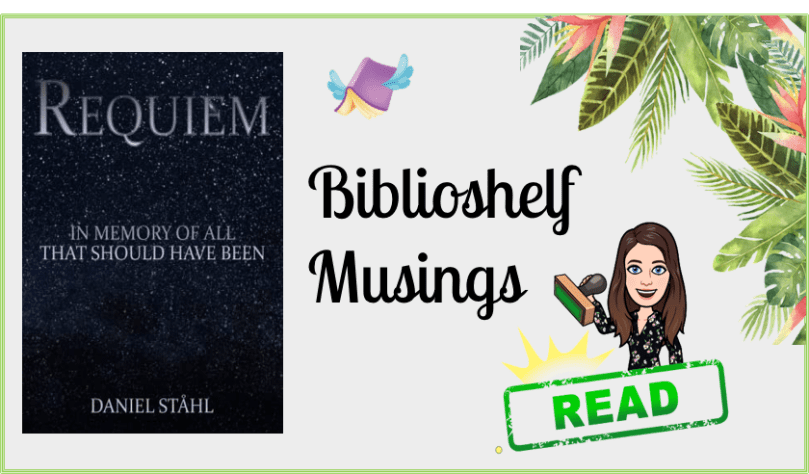
Biblioshelf Musings – Requiem by Daniel Ståhl

Hello Bibliofriends!

This week’s Biblioshelf Musings is of the poetry genre! I was approached by the author Daniel Ståhl to read Requiem (In Memory Of All That Should Have Been), his collection of sonnets at the beginning of this year and since I haven’t really read any poetry recently, I thought this would be a great time to dip my toe back in again. Poetry seems to offer a versatility and flexibility that you don’t always get with fiction so I was pleased to be able to go into Daniel’s collection with a really open mind to see what I found – and reader, I was mind-blown at how stunning Daniel’s writing was and sheer level of detail and effort that must have gone into creating it.


Book: Requiem: In Memory Of All That Should Have Been by Daniel Ståhl
Genre: Poetry
Publication Date: December 2020
Publisher: lulu.com
Pages: 430
Rating: 📚📚📚📚.5

Synopsis (from Goodreads)

Through its 211 interwoven poems, this double-tiered recursive crown of sonnets takes the reader on an epic journey to the heart of mankind’s would-be nemesis – herself – and back again. Does her destiny await in the unexplored depths of the cosmos, or in a toxic wasteland of her own making? Does she have the will to shape her own future, or is she a slave to her myopic wants and impulses?

My Musings

Requiem is like nothing else I have ever read. Told through sonnets, the overarching story follows a she-giant through her various thoughts and contemplations as she considers what it really means to craft her own destiny and be alive.

In such brief 14 line segments of writing, Ståhl quickly builds up an atmosphere that I found incredibly intoxicating – at times its apocalyptic, in places it offers futuristic hope. The undercurrent of dystopia running through each sonnet really emphasised the internal predicaments and turmoil of the she-giant’s musings and I found myself almost picturing her standing in some Mount Doom-esque landscape just watching the world fall to bits around her – that imagery was intensely vivid and brought about by such powerful language and expression. At times, I found the whole arc of the character’s journey to be slightly on the abstract side (for my own brain!), but it was a nice feeling just be swept away by Daniel’s writing. You cannot help but be drawn into this she-giant’s story, to experience her feelings and despair and then develop this sense of empathy and desire for her to rescue herself.

“Are we witnessing the beginning of the end, or merely the end of the beginning?”

As we wind our way through each sonnet, the continuous countdown of the clock on the pages between each poem heightens that build up of tension and the sense of heading towards something that we may never come back from. In our modern days where we are only now seeing the devastating impacts our industrial and digital revolutions have on planet earth and the natural world (and having recently read David Attenborough’s A Life on Our Planet), I couldn’t help but transpose that real world sense of crisis into the narrative that Ståhl was weaving; the sense that on some futuristic level ‘this’ could be the fate of mankind made for a quite heady reading experience.

For me though, the absolute gem of this whole book was the sheer intricacy, detail and conception of the whole thing. With an English Lit degree, I’m no stranger to sonnets – but a crown of sonnets…? This was an entirely new reading experience for me and I was so grateful for Daniel’s concise breakdown and explanation at the start of his work to help me understand how this collection was constructed. Even then, my comprehension of what was actually unfolding between each crown, then each master sonnet, and how they seamlessly moulded and pulled everything preceding together took a little time for me to fully realise its impact, but when the light bulb went off… wow! By the time I got to the very final page, my excitement at the grand unveiling had reached fever pitch and my mind was well and truly blown. The dedicated and meticulous planning that went into crafting these double-tiered recursive crowns and the mechanics at how it all fits together like some grand poetic jigsaw puzzle is like nothing I have ever read before – I don’t really want to give any spoilers away by revealing more because discovering it for yourself is just so mesmerising.

Requiem really is a stunning work of art. You don’t have to be an avid poetry fan to find something here to enjoy. Whether you’re a reader looking for something different and new, you’re intrigued by how to survive a future that could be apocalyptic and dystopian; you appreciate the technical and structural aspects an author employs when crafting of a piece of writing – there is so much to be entranced by and fall in love with between the pages of Requiem. 

Why Should I Read This?

For the intriguing, structurally exquisite organisation of this poetic masterpiece.
For a fun-filled fusion of science-fiction, philosophy and poetry.
For a unique reading experience. 

Find out more about this book here:

Amazon | lulu.com | Goodreads | Author’s Website

Connect with me here:

Twitter | Goodreads | Book Sloth: @thebiblioshelf | Email: thebiblioshelf@gmail.com